
Beginner Sewing Machine Guide: How to Choose, Set Up & Feel Confident With Your First Machine
Feeling intimidated by your sewing machine? You’re not alone. This beginner sewing machine guide will walk you through how to choose a machine, understand the basic parts, learn essential stitches, and set everything up without stress. It’s designed for total beginners — and anyone returning to sewing after a long break.
Let me guess.
You’ve been side-eyeing a sewing machine like it might suddenly spring to life, start rattling, and expose the fact that you have no idea what you’re doing.
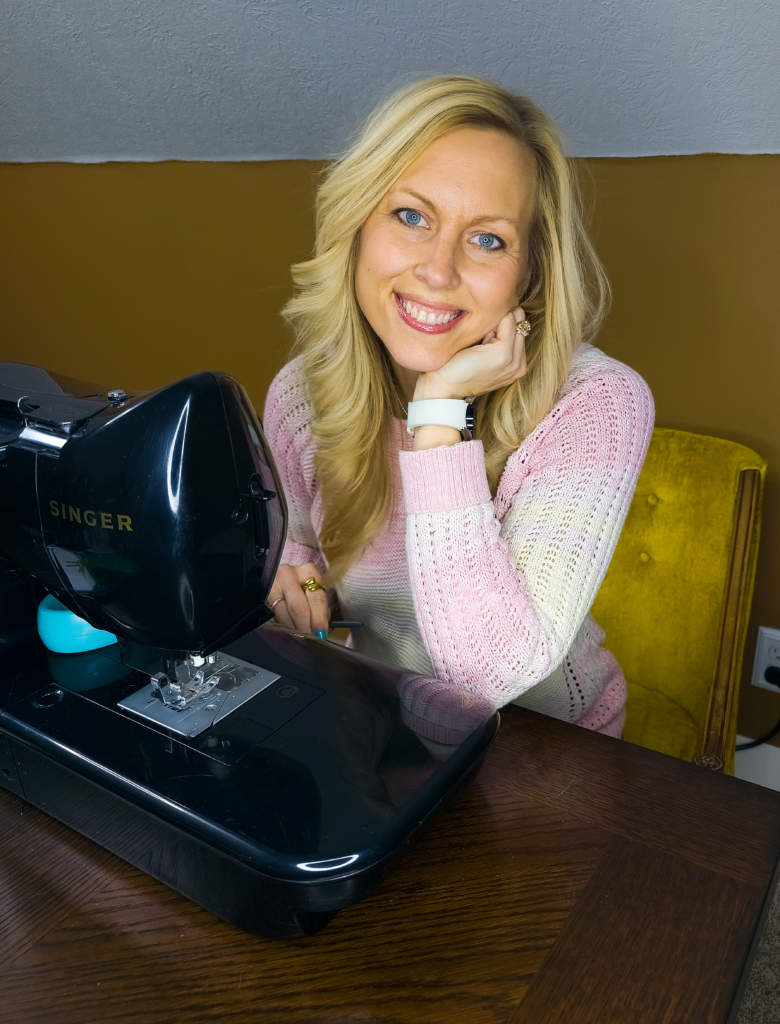
You’re not alone. Sewing machines have a reputation. They look complicated, sound loud, and come with manuals that feel like they were written for people who already know how to sew. No wonder beginners feel intimidated before they ever plug the thing in.
Here’s the truth though: sewing machines aren’t scary — they’re just unfamiliar. And unfamiliar things tend to look louder, sharper, and more judgmental than they actually are.
This guide is here to gently introduce you to your machine. No pressure to sew perfectly. No expectation that you’ll remember everything. Just a calm, confidence-building walk-through to help you understand what you actually need to know — and what you can safely ignore for now.
What We’ll Cover
- You do not need an expensive or fancy sewing machine to begin
- Understanding the basic parts builds confidence faster than memorization
- Most stitch settings exist for “later you,” not today
- Setup is about comfort and safety, not speed
- Confidence comes from familiarity, not perfection
“A sewing machine isn’t a test of your ability — it’s a tool waiting to be introduced properly.”
Table of Contents
- Quick Answer: Is a Sewing Machine Really That Scary?
- Why Sewing Machines Feel Intimidating (And Why That’s Not Your Fault)
- You Don’t Need the Fanciest Machine (Promise)
- The Basic Parts of a Sewing Machine (Let’s Name the Buttons)
- Common Stitch Types (The Only Ones You Need Right Now)
- Setting Up Your Machine Without Spiraling
- How to Start Building Confidence (Before You Sew Anything Real)
- Next Steps for Beginner Sewists
- FAQs
A sewing machine isn’t scary — it just looks overwhelming
Before you understand what the parts do and which settings actually matter for beginners.
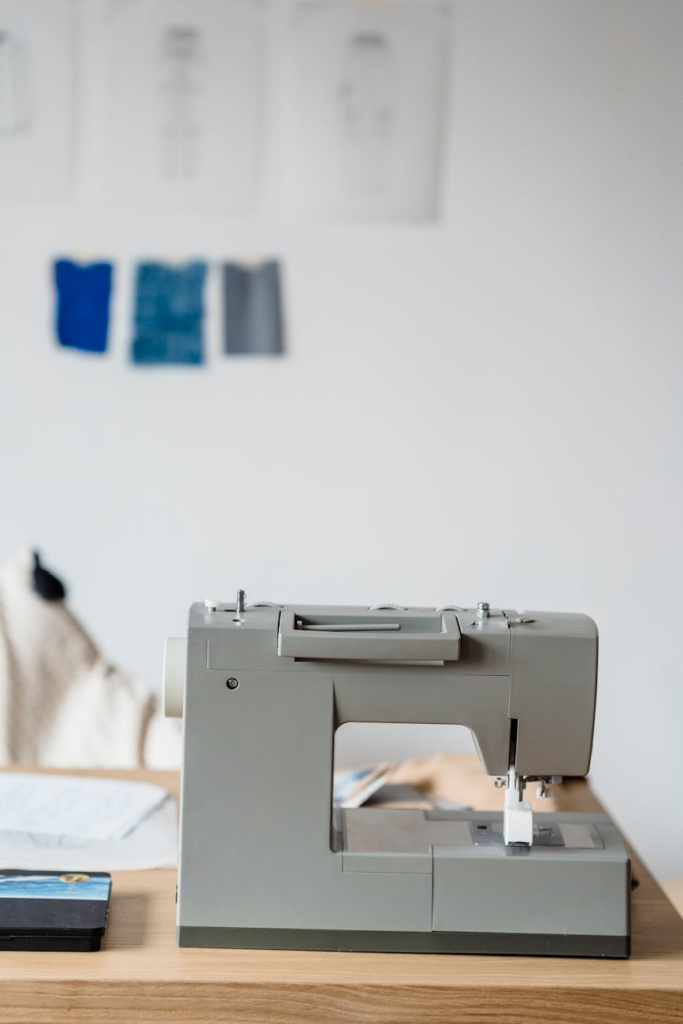
Here’s something I wish someone had told me earlier:
Feeling intimidated by a sewing machine doesn’t mean you’re bad at sewing — it means you’re human.
Most beginners don’t struggle because sewing is hard. They struggle because they’re dropped into the deep end with too many buttons, too much jargon, and a quiet fear of “messing it all up.”
I’ve been there. I didn’t want to sew. I was signed up through 4-H, sat in a basement classroom with fifteen other teens and a very cantankerous instructor, and learned the hard way that sewing doesn’t reward rushing or panic. It rewards patience and practice — something nobody tells you at the start.
This post is here to slow things down.
Here’s what we’ll cover:
- Why your machine feels intimidating (and why that’s not your fault)
- What kind of machine you actually need
- The basic parts worth knowing
- The few stitch types that truly matter
- How to set things up calmly, without pressure
“You don’t need confidence before you begin — confidence is what shows up after you start.”
Why Sewing Machines Feel Intimidating (And Why That’s Not Your Fault)
Sewing machines feel intimidating because they’re visual chaos.
Knobs. Dials. Levers. Seventeen mysterious twisty things the thread apparently must pass through exactly or else. Manuals that assume you already know what a bobbin is. Decorative stitches you’ll probably never use but somehow feel judged by.
Most people think, “I’m just not cut out for this.”
What’s actually happening is simpler: you were never oriented.
When I first sat down at a machine in that 4-H classroom, no one explained it like a human. We were taught steps, not relationships. And without context, everything feels louder and more complicated than it is.
Most people think they lack ability. What they really lack is familiarity.
Fear fades when things are named, slowed down, and seen clearly.
What Kind of Sewing Machine Do Beginners Need?
Let’s get this out of the way early.
You do not need:
- a top-of-the-line machine
- a thousand stitch options
- a screen that lights up like a spaceship
A beginner sewing machine needs to do a few things well:
- sew a straight line
- adjust stitch length
- handle basic fabrics
- run reliably
That’s it.
I’ve sewn award-winning garments on machines that weren’t fancy. Confidence doesn’t come from upgrades — it comes from repetition. Starting simple lets you focus on learning how fabric moves, how stitches behave, and how you feel while sewing.
If you’re curious about what tools actually matter (and which ones can wait), I’ve shared a simple breakdown elsewhere — but for now, know this: your machine is enough.
A simple machine used often beats a fancy one never used.
The Basic Parts of a Sewing Machine (Let’s Name the Buttons)

You don’t need to memorize every part. You just need to recognize them.
Think of this as introductions, not a pop quiz.
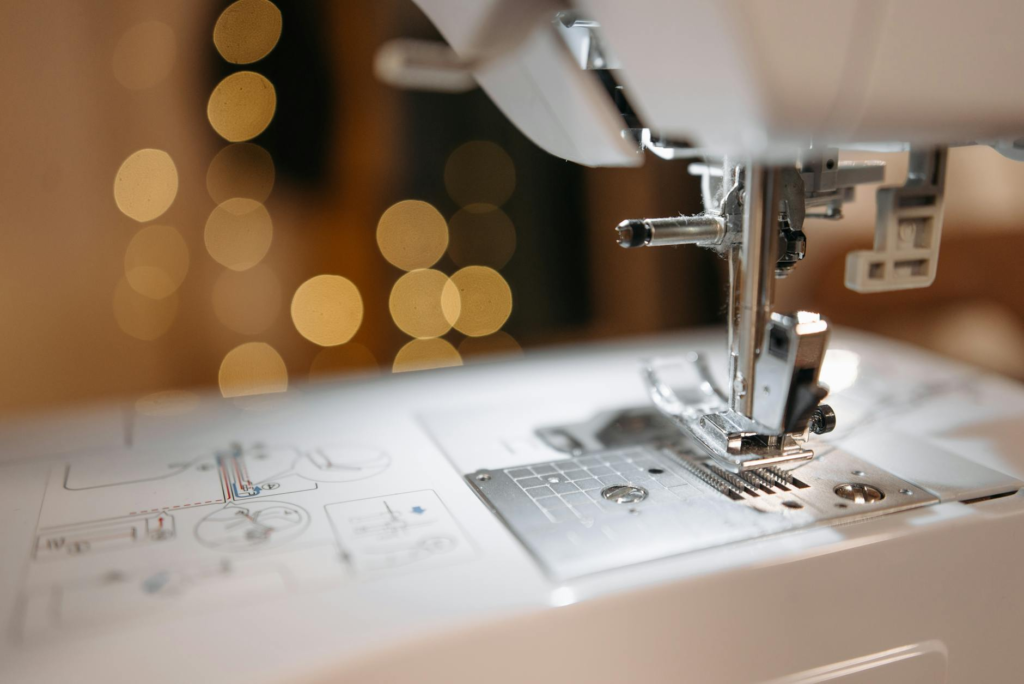
- Handwheel: The wheel on the side. It manually raises and lowers the needle. Think of it as your safety brake.
- Needle: Does exactly what it sounds like. Goes up, goes down, makes stitches.
- Presser Foot: The little foot that holds fabric steady. It’s the gentle hand keeping things from wandering.
- Feed Dogs: The grippy teeth under the fabric that pull it through. They do the work — you guide.
- Bobbin Area: Lives underneath. It supplies the bottom thread and causes the most beginner stress. (We’ll handle that gently later.)
- Stitch Selector: The dial or buttons that choose stitch type and length.
You don’t need to master these today. Just knowing what’s what makes the machine feel less like a mystery and more like a tool.
Recognition builds comfort faster than memorization ever will.
Basic Sewing Stitches for Beginners
Your machine probably offers dozens of stitches.
You need three.
- Straight Stitch: Your workhorse. You’ll use this for almost everything.
- Zigzag Stitch: Helps finish raw edges and sew stretchy fabric.
- Backstitch: Not a stitch setting — a function. It locks your seam in place.
Those fancy decorative stitches? Lovely. Optional. Future-you can explore them when you’re bored or curious — not when you’re nervous.
Most people think they need variety. What they actually need is reliability.
Simple stitches will carry you farther than you think.
How to Set Up Your Sewing Machine (Calmly)
Today’s goal is not sewing.
Today’s goal is comfort.
Place your machine on a sturdy surface. Sit so your shoulders are relaxed. Plug it in. Turn it on. Let it hum. (Or roar — some machines only have one speed and it is go.)
No threading yet. No fabric yet. This is just about presence.
When I was learning, setup felt rushed. Looking back, I realise how much calmer things would’ve felt if someone had said, “Just sit with it first.”
Setup is about safety and ease — not speed or productivity.
Easy Sewing Practice Ideas for Beginners
Confidence comes from low-stakes practice.
Use scrap fabric. Sew lines that don’t matter. Let them be crooked. Let them be uneven. Let them exist without meaning.
I snapped needles. Tangled bobbins. Sewed things backward more times than I’d like to admit. None of that disqualified me. It taught me.
Most people think mistakes mean failure. They actually mean learning.
Confidence grows through permission, not perfection.
Want help threading your machine without the stress?
🧵 Here’s a gentle guide that walks you through it one step at a time.
Sew What’s Next
If you’re feeling a little less intimidated by your sewing machine than you were when you started reading — that’s a win. You don’t need to feel confident yet. Familiar is enough for today.
Your machine doesn’t need mastering.
It just needed meeting.
When you’re ready for the next gentle step, you have a couple of calm options:
- Follow the Beginner Sewing Roadmap if you want a clear, stress-free path that walks you through the basics one step at a time, without overwhelm.
- Read the post on 10 Essential Sewing Tools if you’re wondering what actually matters right now — and what can absolutely wait.
- Or simply spend a few quiet minutes with your machine today. Turn the handwheel. Lift the presser foot. Notice how things move. No stitching required.
There’s no deadline here. Sewing will wait for you.
One stitch.
One breath.
One small beginning at a time.
FAQs
Do I need an expensive sewing machine to start?
No. A basic, reliable machine is more than enough for beginners and often easier to learn on.
What if I mess up my sewing machine?
Most beginner mistakes are harmless and fixable. Machines are sturdier than they look.
How long does it take to feel comfortable?
That varies, but comfort usually comes faster once you remove pressure and practice regularly.
Can I learn sewing even if I’m not crafty?
Absolutely. Sewing is a skill, not a personality trait.
What should I practice first?
Straight lines on scrap fabric. Simple, low-pressure repetition builds confidence quickly.