
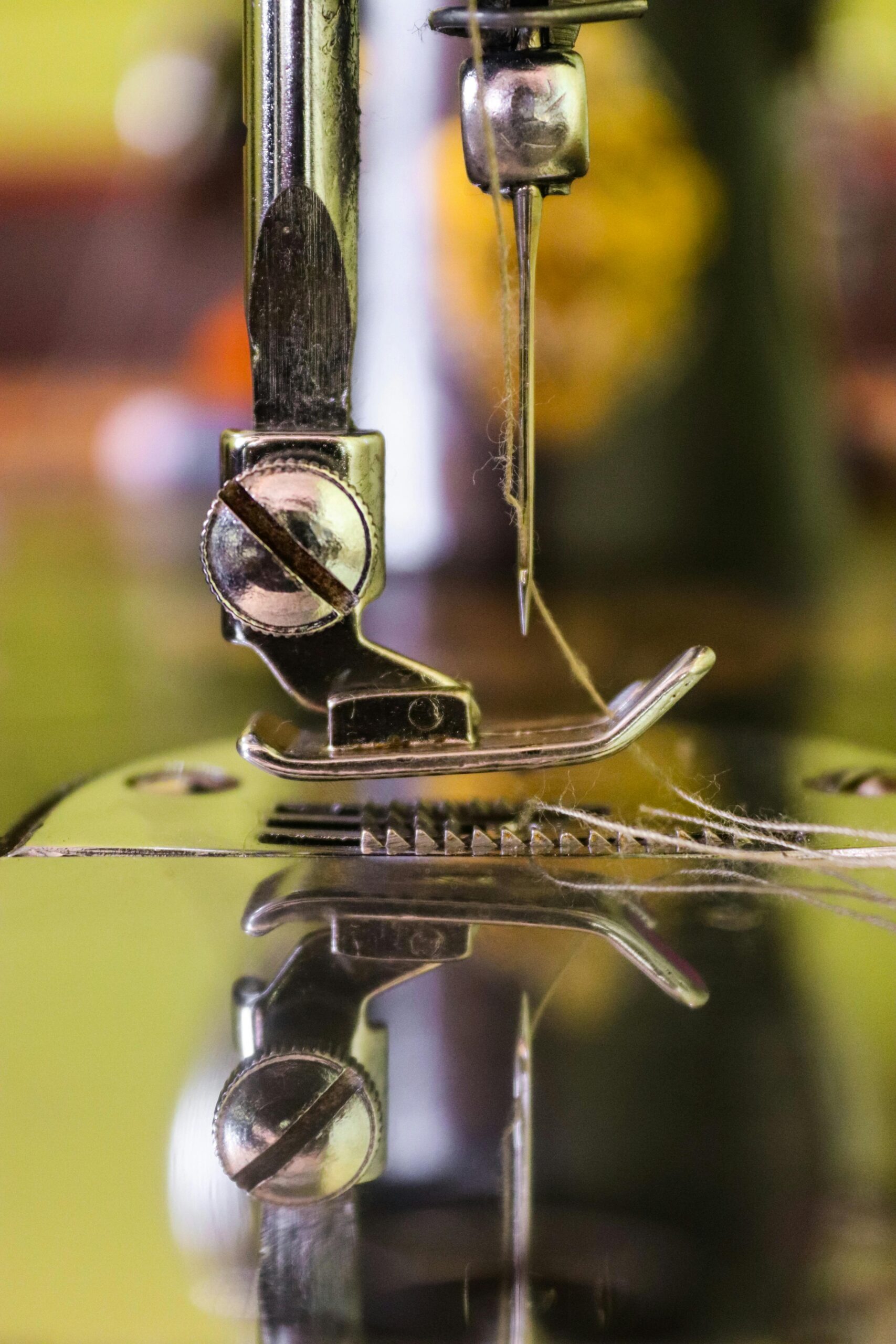
sewing meets systems
Sewing is Just Engineering in Fabric Form
(And that’s a good thing)
Sewing Is Engineering in Fabric Form
The first time most people sit down at a sewing machine, it doesn’t feel logical. It feels unpredictable, slightly chaotic, and strangely personal when things go wrong. Threads tangle, seams pucker, and confidence disappears quickly.
But that experience has less to do with skill and more to do with understanding.
Sewing isn’t magic. It isn’t talent-based guesswork. It’s a mechanical system made up of moving parts, tension, and material behaviour. And once you understand how sewing machines work, the entire experience shifts from frustration to clarity.
This is the difference between reacting and troubleshooting.
- Sewing machines follow a precise mechanical process, not intuition
- Most sewing problems come from small variable changes
- Understanding tension, thread path, and fabric behaviour reduces mistakes
- Sewing becomes easier when approached as a system, not a talent test
- Clarity creates confidence, which unlocks creativity
Sewing stops feeling frustrating the moment you realize it’s not unpredictable — it’s simply a system you haven’t fully seen yet.
Table of Contents
- Why Sewing Feels So Mysterious
- How a Stitch Actually Forms
- Why Sewing Problems Aren’t Personal
- Sewing as a System (Not a Talent Test)
- The Sewing Meets Systems Approach
- Where Beginners Should Start
- FAQ
Sewing is a mechanical process where a sewing machine interlocks threads through a precise sequence of movements. Understanding this system helps you troubleshoot issues and makes sewing feel logical instead of frustrating.
Introduction
Sewing feels hard not because it is complicated, but because it’s rarely explained clearly.
Most beginners are taught steps: thread the machine, press the pedal, follow the line. But when something goes wrong — and it always does — those steps don’t explain why.
That’s where frustration begins.
Because without understanding how sewing machines work, every mistake feels random. And when things feel random, they feel personal.
Here’s what we’ll cover: how sewing actually works, why things go wrong, and how to approach it in a way that replaces confusion with clarity.
Confusion in sewing isn’t a skill problem — it’s an information gap.
Why Sewing Feels So Mysterious
Sewing often feels like something you’re supposed to “just get,” but most people are missing the underlying system.
Instead, you’re left wondering:
- Why does tension matter so much?
- Why does fabric suddenly behave differently?
- Why does everything break the moment you feel confident?
This is a common beginner sewing experience.
Most people assume they’re doing something wrong. In reality, they just don’t yet understand the mechanics behind what’s happening.
Most people treat sewing like a craft you feel your way through. In reality, it works better when treated like a system you understand.
When you don’t know how sewing machines work, every issue feels unpredictable.
Sewing feels mysterious when you can’t see the system behind it.
How a Stitch Actually Forms
A sewing machine doesn’t guess. It follows a precise, repeatable sequence.
Here’s what happens every time you sew:
- The needle moves down through the fabric
- A loop forms behind the needle
- The bobbin hook catches that loop
- The threads interlock
- Tension tightens the stitch
- Feed dogs move the fabric forward
Each part plays a role. If one variable changes, the outcome changes.
This is why understanding sewing machine tension and thread behaviour matters so much.
A dull needle or incorrect threading can disrupt this entire sequence, leading to skipped stitches or thread bunching.
A sewing machine isn’t unpredictable — it’s responding precisely to what you give it. A stitch is not magic; it’s a mechanical sequence you can learn and control.
Why Sewing Problems Aren’t Personal
One of the most frustrating parts of sewing is how personal it can feel when something goes wrong.
But sewing machines don’t operate on emotion or intuition.
They respond to inputs.
When you encounter common beginner sewing mistakes, it’s usually because one of these variables changed:
- Thread path
- Needle condition
- Tension balance
- Fabric type
- Feed consistency
If you’ve ever rethreaded your machine three times only to realize the presser foot was down, you’ve experienced this firsthand. Nothing was “wrong” with you — the system just wasn’t set up correctly.
Once you start identifying variables instead of blaming yourself, everything becomes easier to diagnose.
Sewing problems are mechanical, not personal.
Sewing as a System (Not a Talent Test)
Sewing is often framed as a creative skill, but creativity comes after understanding.
When you treat sewing as a system:
- You troubleshoot instead of panic
- You experiment instead of guess
- You improve faster because you understand cause and effect
The Systems Shift
- Observe what changed
- Identify the variable
- Adjust one thing at a time
- Test and evaluate
This approach turns frustration into progress.
Most sewing issues can be traced back to threading errors, tension imbalance, or needle problems — not lack of ability.
Skill in sewing isn’t about perfection — it’s about recognizing patterns. Sewing becomes easier when you treat it like a system, not a test of talent.
The Sewing Meets Systems Approach
This is the foundation of Sewing Meets Systems.
It’s not about making sewing more complicated. It’s about making it clearer.
Because clarity reduces overwhelm.
When you understand why fabric behaves differently, or how tension actually works, you stop second-guessing every step.
You start building confidence through understanding.
And that creates a much calmer creative process.
Most sewing advice focuses on steps. This approach focuses on understanding.
Clarity doesn’t limit creativity — it enables it. When sewing makes sense, it becomes more enjoyable and more creative.
Where Beginners Should Start
If you’re new to sewing or returning after a break, focus on understanding the fundamentals first.
Start with:
- How to thread your sewing machine correctly
- A beginner roadmap that shows what to learn first
- How different fabrics behave under a needle
Instead of trying to learn everything at once, build your understanding step by step.
Learning how threading works will solve more issues than buying new tools or fabrics.
You don’t need more information — you need the right sequence of understanding. Start small, focus on fundamentals, and build from there.
FAQ
What is actually happening inside a sewing machine?
A sewing machine interlocks a top thread and bobbin thread through a looping mechanism, creating a secure stitch with each needle movement.
Why does my sewing keep going wrong?
Most sewing issues come from small setup errors like incorrect threading, tension imbalance, or using the wrong needle for the fabric.
Is sewing difficult for beginners?
Sewing feels difficult when the mechanics aren’t explained. Once you understand the system, it becomes much easier to learn.
What is the most common beginner sewing mistake?
Incorrect threading and ignoring tension settings are among the most common issues beginners face.
How do I get better at sewing faster?
Focus on understanding how your machine works rather than just following steps. This allows you to troubleshoot and improve quickly.
What You Should Do Now
If sewing has ever felt frustrating or unpredictable, it’s worth reconsidering how you’re approaching it.
Most people are taught what to do.
Very few are taught why it works.
And that difference changes everything.
Start by focusing on understanding, not just doing. Build your knowledge of how sewing machines work, how tension behaves, and how fabric responds.
Because once you understand the system, sewing stops feeling chaotic.
You don’t need to be more talented — you need to see the system more clearly.